
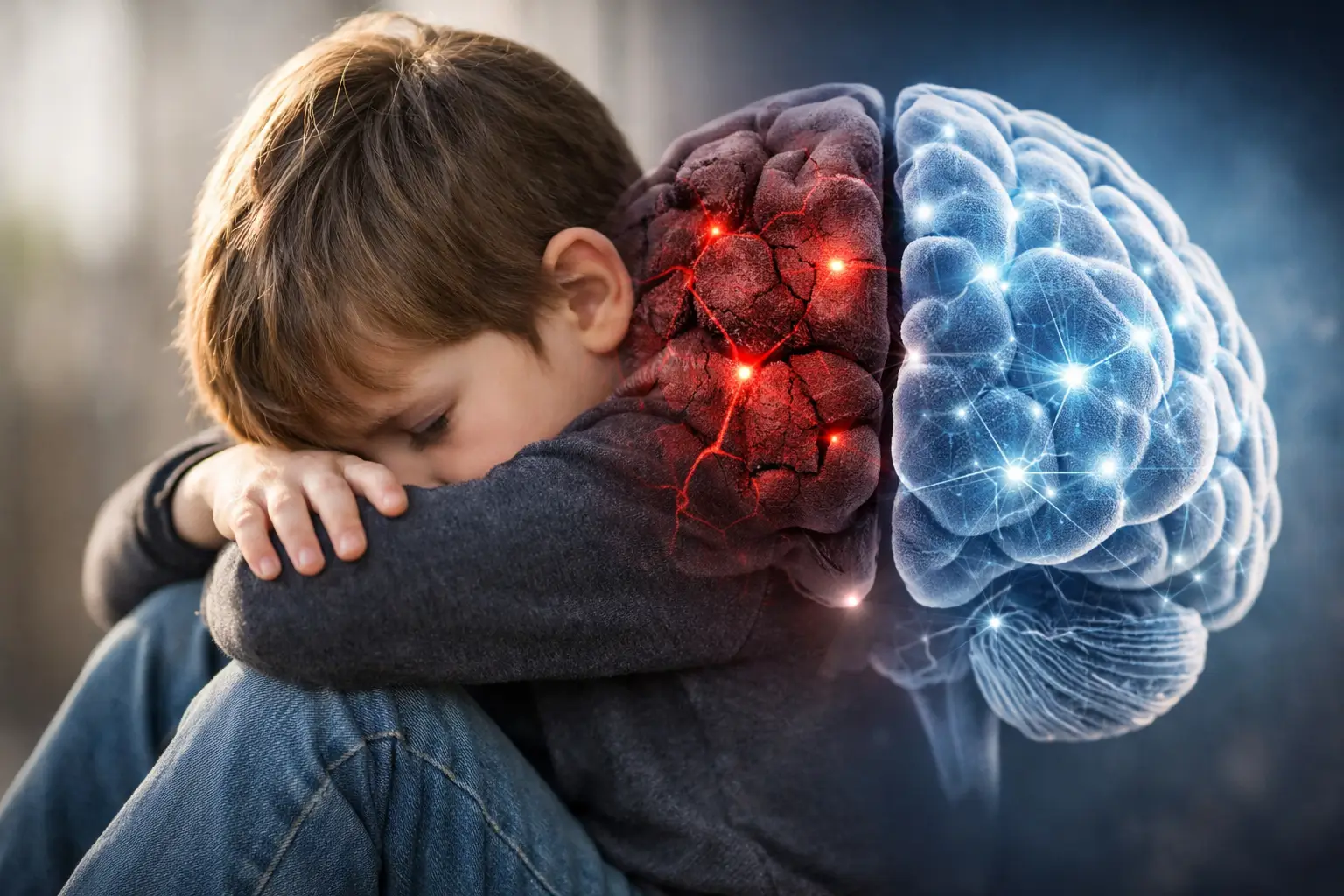
Child maltreatment is a broad clinical category that includes far more than physical abuse. Chronic neglect, emotional abuse, exposure to domestic violence, sexual abuse, exposure to sibling abuse, and repeated relational misattunement all leave distinct marks on neurodevelopment. The type, timing, duration, and relational context of the harm all matter significantly to the final “architecture” of the brain.
The developing brain is highly experience-dependent. Neural pathways strengthen with repetition, especially during “sensitive periods” of development. When a child lives in a state of unpredictability, threat, or unmet basic needs, the brain prioritizes survival physiology over higher-order thinking. This means more metabolic energy is directed toward the brainstem and limbic system (danger detection) and less is available for the prefrontal cortex (exploration, learning, and reflection). This is not a sign of permanent damage, but rather a sign that the brain has organized itself around its lived experience.
The Stress Response System: Hyperarousal and Hypoarousal
One of the clearest ways maltreatment affects development is through the dysregulation of the stress response system, often referred to as the HPA (Hypothalamic-Pituitary-Adrenal) axis. When children are exposed to chronic threat, the body releases stress hormones such as cortisol and adrenaline with toxic frequency.
In a clinical setting, this manifests in two primary ways:
Hyperarousal: The nervous system is stuck in “on.” This looks like impulsivity, irritability, sleep disruption, constant scanning of the environment, and an inability to settle.
Hypoarousal: The nervous system “shuts down” to protect itself. This presents as emotional numbness, collapse, dissociation, or appearing “checked out.”
In the video below, I discuss how to practically apply the concept of the “Window of Tolerance” to help clients navigate these states of hyper- and hypoarousal, ensuring they stay within a zone where healing and integration can actually occur Window of Tolerance.
Both states reflect a nervous system that is responding based on what it has learned to expect from the world. This is why behavior-based interventions—such as rewards, consequences, or logic-based reasoning—often fall short. If a child is operating from survival physiology, their “thinking brain” is essentially offline. Regulation and safety must be addressed before any cognitive work can begin.
Key Brain Regions Impacted by Early Adversity
While the brain works as an integrated whole, research into the neurobiology of childhood trauma points to several specific regions that are commonly altered by maltreatment:
The Amygdala and Threat Detection The amygdala is the brain’s “smoke detector.” In children exposed to abuse, this system can become hyper-reactive. They may perceive a teacher’s neutral facial expression or a sudden transition in the classroom as a life-threatening risk. Their brain isn’t “overreacting” in a vacuum; it is performing a pattern-match based on a history of danger.
The Hippocampus and Memory Integration The hippocampus is responsible for memory formation and contextualizing experiences. Chronic stress and high cortisol levels can actually inhibit growth in this region. This explains why traumatic memories are often fragmented or sensory-heavy (smells, sounds, body sensations) rather than a coherent narrative with a clear sense of time.
The Prefrontal Cortex and Self-Regulation The prefrontal cortex is the “CEO” of the brain, handling planning, attention, and impulse control. Maltreatment often disrupts the development of this area, especially when the child lacks a co-regulating adult to help them manage big emotions. This results in what clinicians see as “executive functioning deficits.”
The Invisible Impact of Chronic Neglect While physical abuse often draws immediate intervention, chronic neglect can be equally—if not more—neurodevelopmentally significant. When a child’s needs for responsiveness, soothing, and stimulation are unmet, the brain does not receive the “serve and return” input required for healthy integration.
Neglect is the absence of necessary experience. Children who have experienced profound neglect may show delays in language, social engagement, and body awareness. Some may appear compliant and “easy,” which masks a deep state of hypoarousal and developmental stagnation. For the clinician, recognizing the “quiet” symptoms of neglect is just as vital as managing the “loud” symptoms of abuse.
Advanced Training with Dr. Martin Teicher
To truly help these children, clinicians must move beyond general trauma theory and into the specific neurobiological mechanisms of healing. This is why the ATTCH Trauma Academy is proud to host Dr. Martin Teicher, a leading neuroscientist from Harvard Medical School, for our on-demand workshop: “Wounds that Time Won’t Heal: The Neurobiology of Child Abuse.”
Dr. Teicher is a pioneer in the study of how maltreatment remodels the human brain. His research into “sensitive periods” reveals that the timing of abuse determines which brain circuits are most affected. Understanding these nuances allows clinicians to move from “one-size-fits-all” therapy to targeted, neuro-informed interventions.
Lori Gill, Founder and Lead Trauma Therapist at ATTCH, emphasizes the depth of this course: “I could learn from Dr. Teicher for days! The depth of knowledge he offers—moving from the microscopic level of brain circuits to the macroscopic level of clinical treatment—is unparalleled. This is the training that turns a good therapist into an expert trauma specialist.”
Why Self-Paced Learning Works for Complex Content
This training is available as a pre-recorded, self-paced module. Because the content is so rich and scientifically dense, the self-paced format allows clinicians to:
Pause and Reflect: Take time to digest complex neurobiological data.
Rewatch Key Sections: Deepen your understanding of specific brain pathways.
Integrate Gradually: Apply the concepts to your current caseload as you move through the material.
Clinical FAQ: Neurobiology of Trauma
Can the brain heal after maltreatment? Yes. The brain remains plastic throughout life. While maltreatment creates certain “default settings,” targeted interventions like somatic experiencing, attachment-focused therapy, and consistent relational safety can help the brain create new, healthier pathways.
Why do symptoms change as a child gets older? As a child grows, the demands on their brain increase. A child who seemed “fine” at age six may struggle at age fourteen because the prefrontal cortex is now required to handle complex social dynamics and identity formation that the earlier trauma disrupted.
How does this training help with my current clients? Understanding the neurobiology allows you to explain a client’s reactions to them in a way that reduces shame. It also helps you choose the right “entry point” for therapy—knowing when to use body-based regulation versus cognitive processing.
Support Healing Through Your Professional Growth
When you enroll in a course at the ATTCH Trauma Academy, your professional development has a direct social impact. A portion of the proceeds from your registration for Dr. Teicher’s training is donated to ATTCH Niagara.
ATTCH Niagara is a non-profit organization that provides free and low-cost trauma-specialized therapy to those who would otherwise be unable to access care. By investing in your own education, you are directly funding the healing of survivors in our community ATTCH Niagara
Conclusion: Moving Toward Neuro-Informed Care
The brain changes in relationship, and it can also heal there. By integrating the latest neuroscience into your clinical practice, you provide your clients with more than just support—you provide them with a roadmap for neurobiological recovery.
Visit the ATTCH Trauma Academy Course Catalog to enroll in “Wounds That Time Won’t Heal” with Dr. Martin Teicher today Wounds That Time Won’t Heal