If you are ready to take your trauma skills to the next level or if you are seeking effective interventions to add to trauma informed awareness, this training is for you. All too often systems treat the smoke (symptoms) rather than the fire (underlying issues). ITATM™ treats the fire which then has a direct impact on the smoke. At ATTCH we have been training therapists worldwide in our effective and time-efficient approach for the past 15 years with great success!
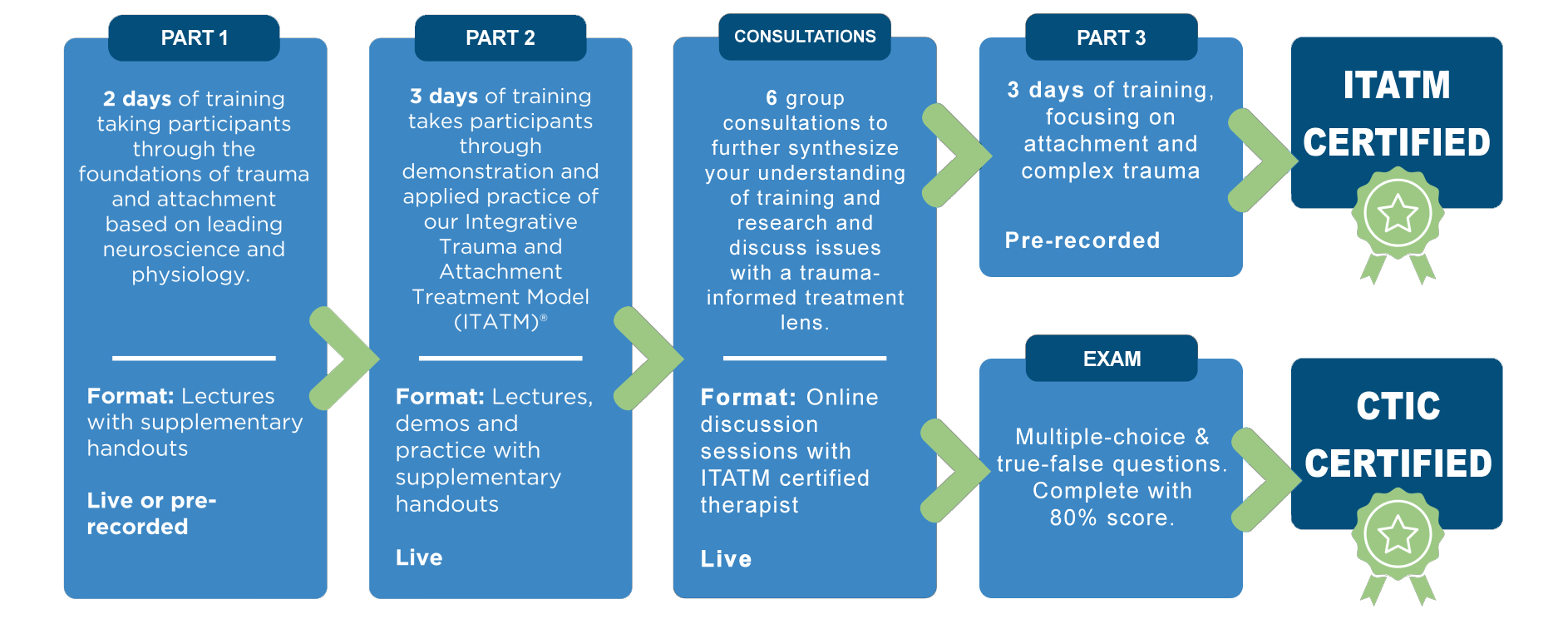
ATTCH is pleased to offer a Trauma Specialist certification program to provide current, quality trauma and attachment training in Canada for individuals, clinicians, and organizations and trauma-integration training in our Integrative Trauma and Attachment Treatment Model (ITATM)™. Our program is quite comprehensive and holistic in nature, focusing on mind-body neuroscience and somatic approaches. We offer two certification streams, which are symbiotic, allowing for the potential to earn dual certifications. We also recognize that there are many people doing trauma integration and trauma processing work, which is why we have two different streams to meet your unique professional development needs.