
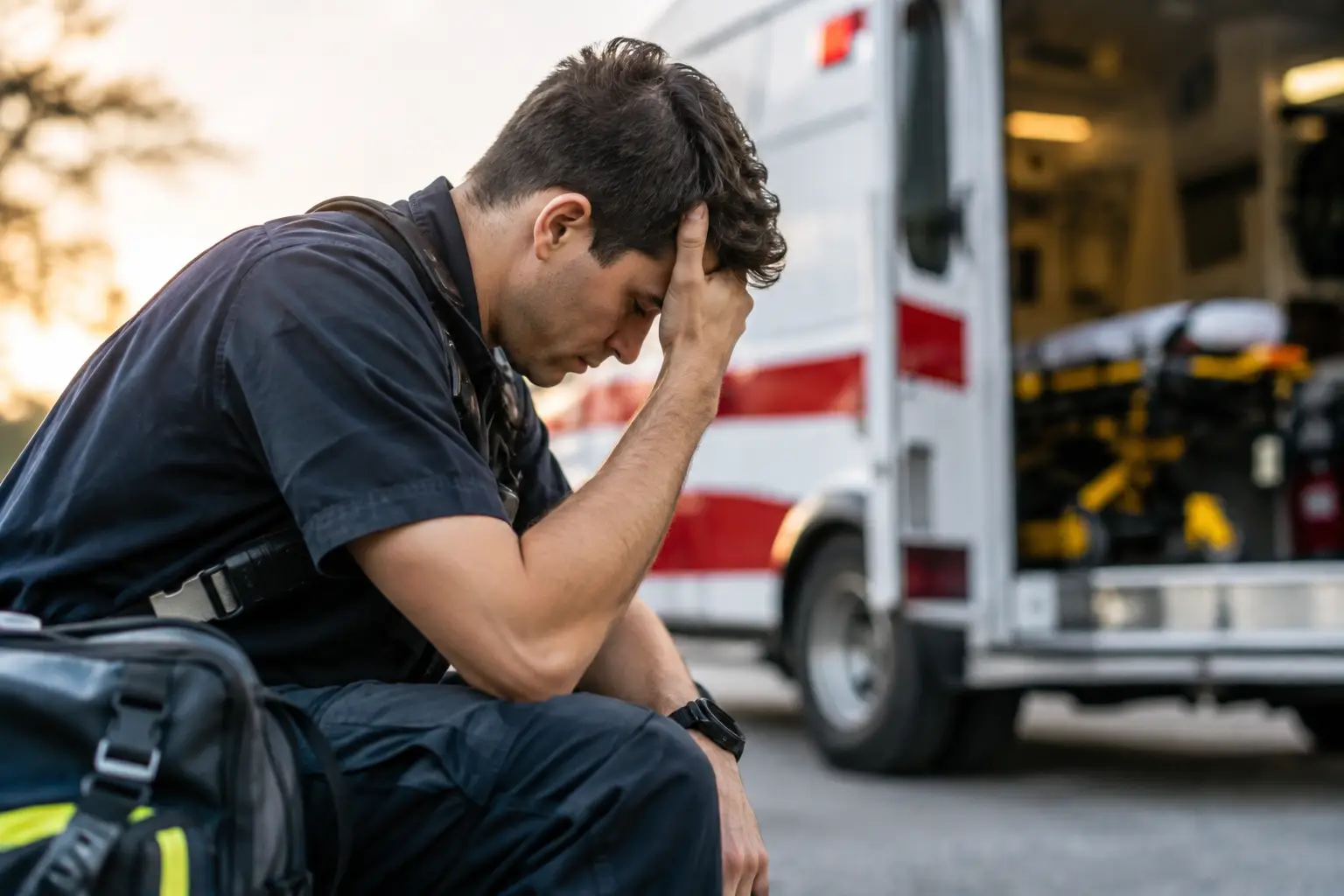
A paramedic can make clinically sound decisions in a chaotic scene, then find themselves unable to enter a grocery store the following week because the sound of a child crying pulls them back into the call. This emergency responder trauma case study illustrates a central truth for leaders and clinicians: competence under pressure does not protect a nervous system from the cumulative impact of exposure.
The following composite case is based on common clinical patterns rather than one identifiable person. Its purpose is not to diagnose responders from a distance or suggest that every difficult call causes trauma. It is to show what changes when care moves beyond awareness, respects occupational realities, and is paced according to nervous-system capacity.
Emergency Responder Trauma Case Study: The Presentation
“Jordan,” a 38-year-old firefighter-paramedic with 12 years of service, sought support after a fatal pediatric call. The event was not Jordan’s first exposure to death, serious injury, or family grief. However, in the weeks afterward, sleep became fragmented and alcohol use increased as a way to shut off intrusive images. Jordan began avoiding the station kitchen, where informal retellings of difficult calls often occurred, and became increasingly reactive at home.
At work, Jordan remained highly functional. Reports were completed, equipment checks were meticulous, and colleagues saw someone who was quieter but dependable. At home, the picture was different: emotional numbness, sudden anger, disconnection from a partner, and a persistent sense of threat. Jordan described feeling ashamed that one call had such an impact after years in the field.
That shame mattered clinically. Emergency responder cultures can rightly value readiness, teamwork, and decisive action, yet some responders have learned that needing support will be interpreted as weakness or professional risk. A trauma-responsive approach does not treat this concern as resistance. It recognizes it as a safety calculation shaped by the work environment.
Why a Single-Incident Lens Was Not Enough
The pediatric fatality was the immediate trigger, but it was not the whole story. Assessment identified a history of repeated critical incidents, disrupted sleep from rotating shifts, early family experiences of emotional unpredictability, and a recent staffing shortage that had reduced recovery time between calls. None of these factors independently explained Jordan’s symptoms. Together, they narrowed the window of tolerance.
This distinction is essential. A responder may have a clear index event and still require treatment that considers cumulative occupational stress, attachment patterns, moral injury, grief, and current organizational conditions. Conversely, not every responder who is distressed after a call needs intensive trauma processing. The appropriate level of care depends on symptom severity, safety, functional impact, available supports, and readiness for deeper work.
Jordan also reported guilt: a belief that a different decision might have changed the outcome. The clinical team differentiated realistic responsibility from hindsight-driven self-blame. They also made room for the moral pain of witnessing a situation that violated Jordan’s sense of how life should unfold. Reassurance alone would have been insufficient. The work required compassionate, specific exploration without forcing a premature retelling.
The First Treatment Goal Was Safety, Not Disclosure
A common mistake in trauma care is assuming that relief comes from recounting the worst event in detail as soon as possible. For responders who are already dysregulated, sleep-deprived, or living in a state of occupational vigilance, this can intensify symptoms and undermine trust.
Jordan’s initial plan focused on stabilization. Sessions included psychoeducation about threat activation, grounding that was practical enough to use at a station, and tracking early signs of escalation. Rather than asking Jordan to “calm down,” the clinician helped identify choices that could signal safety to the body: orienting to the room, lengthening an exhale, feeling the feet against the floor, and using brief movement between calls when possible.
The work also included a collaborative safety plan around alcohol use, sleep, and moments of anger at home. Jordan was not asked to become perfectly regulated. The goal was to build enough capacity to notice activation earlier and respond differently before it became overwhelming.
Supporting the body, brain, and meaning-making
A neurosequential, integrative formulation can be especially useful with emergency responders because symptoms often appear across multiple systems. Jordan’s startle response and insomnia reflected persistent threat activation. Emotional shutdown reflected a protective strategy, not a lack of caring. The belief “I failed” carried painful meaning that could not be resolved through body-based regulation alone.
Treatment therefore moved across the brain, body, and mind. Regulation skills created a foundation for trauma processing. Relational safety in therapy reduced the need to perform competence. Cognitive and meaning-focused work addressed guilt, loss, identity, and the fear that recovery would make Jordan less capable on the job.
At ATTCH, this kind of sequencing is central to implementation-ready trauma-responsive care. A technique is only as helpful as its timing. Asking a highly activated person to analyze their thoughts may not be effective, while exclusively teaching regulation without addressing the event’s meaning may leave the core injury untouched.
Processing Began When Jordan Had More Choice
After several weeks, Jordan reported fewer nightmares, more consistent sleep, and an improved ability to pause before reacting at home. The pediatric call remained painful, but it no longer produced the same immediate flood of sensory detail. This was the point at which careful trauma processing became clinically appropriate.
Processing was paced and titrated. Jordan approached manageable portions of the memory while maintaining connection to the present. The clinician monitored signs of hypoarousal as carefully as obvious distress. Going blank, becoming overly intellectual, or losing time in session were treated as signals to slow down, not evidence that Jordan was “not trying.”
Over time, Jordan could distinguish grief from responsibility. The work did not erase the tragedy or make the call acceptable. It helped Jordan hold an accurate account of what happened: actions were taken within the limits of the scene, and a devastating outcome was not proof of personal failure.
This phase also addressed identity. Jordan feared that letting go of guilt would mean not caring enough about the child or family. The clinician reframed this carefully: honoring a life does not require carrying unending self-punishment. Sustainable service requires the capacity to remain human without being consumed by every loss.
The Organizational Context Cannot Be an Afterthought
Individual treatment helped Jordan, but the workplace still mattered. A return-to-work or stay-at-work plan was developed with appropriate consent and clear boundaries around confidentiality. The aim was not to disclose clinical details to supervisors. It was to identify practical supports that reduced avoidable strain.
For Jordan, this included predictable check-ins, temporary flexibility around certain call assignments when feasible, and clarity about how to access peer and clinical support. A trusted supervisor was coached to avoid both extremes: treating Jordan as fragile or pretending nothing had happened. Brief, specific questions such as “What would help you work safely this week?” created more room for honest communication than broad demands to be resilient.
Organizations should also examine the conditions that turn exposure into prolonged harm. Chronic overtime, inconsistent leadership responses, punitive attitudes toward help-seeking, and inadequate decompression opportunities can all erode recovery. Individual therapy cannot compensate indefinitely for a system that repeatedly overwhelms staff.
Lessons for Clinicians and Leaders
This emergency responder trauma case study offers several practical lessons. First, assess cumulative exposure alongside the immediate incident. Second, establish regulation and relational safety before intensive processing. Third, treat shame, moral injury, and identity concerns as clinically meaningful rather than secondary issues.
For organizational leaders, the lesson is equally direct: trauma-responsive practice is not a one-time wellness presentation after a critical incident. It is reflected in policies, supervisor behavior, confidentiality protections, workload decisions, and the quality of referral pathways. Peer support can be valuable, but peers should not be expected to provide treatment for complex trauma.
At a three-month review, Jordan reported improved sleep, reduced alcohol use, and renewed connection with family. Returning to meaningful work felt possible, though not effortless. Some calls still activated grief, and Jordan continued to use treatment and workplace supports. That outcome is realistic: healing is not the absence of emotion. It is the restored ability to experience emotion without losing safety, connection, or choice.
Emergency responders are often asked to enter moments others cannot bear to witness. The most responsible systems do not merely thank them for that service. They create conditions where seeking care is protected, trauma treatment is skillfully paced, and recovery is understood as part of sustainable public safety.